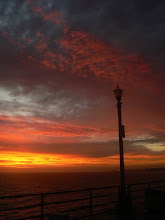
I have a confession to make: I don't want to graduate. I have less than seven months of school left, and I'm really not ready to be done. I don't think I'm ready to move on into the "real world," so to speak. I want to have another year to finish my book and actually get tired of college. (I'm also still secretly hoping that my books will be instantly successful so I won't ever have to rely on a 9-to-5 job. I would much prefer the flexible schedule of writing, even if I was still writing 40 hours a week.) I also don't want to leave behind all the friends I've made who are two or three years behind me. Sure, I'll be around campus when I have the chance, I hope, and I'll still do things with all of these friends, but... it won't be the same. It won't be as easy as it is right now, when I still go to school here. I don't want to lose that.
But, at the same time, I trust God. I know that he put me both where I am and WHEN I am for a reason. I've always thought that I shouldn't be in the year I am because my closest friends are, with a few exceptions, either older or younger than I am, not the same age. When I'm the youngest in whatever I'm doing (freshman year, in particular), my friends are usually older, and when I'm the oldest, my friends are younger. I don't know why that happens, and I've always wished that I had either skipped a grade or taken a year off or something like that. But, God has me where I am for a reason. I don't know what that reason is, but I trust that God will bring good out of me being where and when I am. It may not be the good I would hope for, but... it will be better than the good I hope for, because, with God, how could it not be? I just have to learn to trust him.
Monday, October 10, 2011

Tuesday, September 27, 2011
The Hard Things
For some reason, I feel like writing a new blog post. But I don't have a particular subject, so I'm just going to blather on for a while until I run out of things to say.
So I've been writing this book recently. It's interesting. I keep not wanting to write, but once I sit down and start reading, I make a lot of progress in not very much time. Honestly, the hardest part is just making myself sit down to write because I keep telling myself that I want to do something more interesting with my time. Between Sunday and Monday, I wrote over 3,000 words because I just sat down and wrote for a total of maybe 3 hours (probably a bit less, actually). That's a lot of words, considering a full-length novel is usually around 80,000 words. That means that, if I could sit down and write for eight hours a day like a normal job, and sustain only half that pace, I could write a full book (granted, with no editing) in a month. That's incredible. Basically, I just need to sit down and write.
It's funny how many other things are like that, too. Like, homework. Some homework, of course, does take a lot of time, but a lot of other homework doesn't. We just don't start it because we keep putting it off. Procrastination really kills creative productivity. Or, if you expand out of simply talking about time, but just looking at things that are hard to do, it's amazing how many things we fail to do simply because they're hard, even if we actually have the ability to do them. It reminds me of something G. K. Chesterton said: "Christianity has not been tried and found wanting; it has been found difficult and not tried." What's true of Christianity is true of so many other things as well. We look at a task ahead of us, and rather than setting ourselves up in God's strength to overcome that task, we decide it's too hard and pick something else instead. Let's not do that. Let's actually do the hard things, because they're better for us.
Of course, that takes a lot of work. It's really hard to train our wills to go with the things that are hard because we tend to want comfort. We want to feel good, and not actually be good. But in the end, if we take the time to work hard and do the hard things, if we train ourselves to WANT to do those things, it's SO much better than otherwise. I have to keep telling myself this over and over again. I don't do a very good job of it yet, but oh, I WANT to. I want to have the strength of will to choose the hard things and stick with them, because that will make me a better person and will make me more like Christ for the day when I can finally see him face to face.
"For now we see in a mirror dimly, but then face to face. Now I know in part; then I shall know fully, even as I have been fully known." - 1 Cor. 13:12
"Beloved, we are God's children now, and what we will be has not yet appeared; but we know that when he appears we shall be like him, because we shall see him as he is." - 1 John 3:2
So I've been writing this book recently. It's interesting. I keep not wanting to write, but once I sit down and start reading, I make a lot of progress in not very much time. Honestly, the hardest part is just making myself sit down to write because I keep telling myself that I want to do something more interesting with my time. Between Sunday and Monday, I wrote over 3,000 words because I just sat down and wrote for a total of maybe 3 hours (probably a bit less, actually). That's a lot of words, considering a full-length novel is usually around 80,000 words. That means that, if I could sit down and write for eight hours a day like a normal job, and sustain only half that pace, I could write a full book (granted, with no editing) in a month. That's incredible. Basically, I just need to sit down and write.
It's funny how many other things are like that, too. Like, homework. Some homework, of course, does take a lot of time, but a lot of other homework doesn't. We just don't start it because we keep putting it off. Procrastination really kills creative productivity. Or, if you expand out of simply talking about time, but just looking at things that are hard to do, it's amazing how many things we fail to do simply because they're hard, even if we actually have the ability to do them. It reminds me of something G. K. Chesterton said: "Christianity has not been tried and found wanting; it has been found difficult and not tried." What's true of Christianity is true of so many other things as well. We look at a task ahead of us, and rather than setting ourselves up in God's strength to overcome that task, we decide it's too hard and pick something else instead. Let's not do that. Let's actually do the hard things, because they're better for us.
Of course, that takes a lot of work. It's really hard to train our wills to go with the things that are hard because we tend to want comfort. We want to feel good, and not actually be good. But in the end, if we take the time to work hard and do the hard things, if we train ourselves to WANT to do those things, it's SO much better than otherwise. I have to keep telling myself this over and over again. I don't do a very good job of it yet, but oh, I WANT to. I want to have the strength of will to choose the hard things and stick with them, because that will make me a better person and will make me more like Christ for the day when I can finally see him face to face.
"For now we see in a mirror dimly, but then face to face. Now I know in part; then I shall know fully, even as I have been fully known." - 1 Cor. 13:12
"Beloved, we are God's children now, and what we will be has not yet appeared; but we know that when he appears we shall be like him, because we shall see him as he is." - 1 John 3:2
Sunday, February 27, 2011
The Future
I've decided that it would be a good idea if I posted more things on here. It's been 11 months since I've used this blog, but I think it's a good place to get my thoughts down on "paper." So, if you like to read blogs, please read and let me know what you think of my thoughts. If I haven't posted anything in a while, bug me to put my thoughts down, because I really should. It'll help me, and it might be interesting to you.
Friday, April 2, 2010
Good Friday
Why call you now this Friday good
On which my Savior died?
His tortured body and his blood:
He hangs there crucified.
‘Tis good, for Jesus’ sacred head
Was wounded for our sin.
His blood ran down; with arms outspread
He died to save all men.
Why call you now this Friday good,
The shame upon the cross?
Messiah hangs upon the wood
And he must take the loss.
‘Tis good, for now our debt is paid,
Through him we owe no more,
And in the tomb his body laid:
Praise Christ, our guarantor!
So call we now this Friday good
And lift our praises high,
For blood and body now our food
Have brought salvation nigh.
Our Lord and Savior, Christ the King
Has died to set us free;
He took the blame for everything
And brought us victory.
On which my Savior died?
His tortured body and his blood:
He hangs there crucified.
‘Tis good, for Jesus’ sacred head
Was wounded for our sin.
His blood ran down; with arms outspread
He died to save all men.
Why call you now this Friday good,
The shame upon the cross?
Messiah hangs upon the wood
And he must take the loss.
‘Tis good, for now our debt is paid,
Through him we owe no more,
And in the tomb his body laid:
Praise Christ, our guarantor!
So call we now this Friday good
And lift our praises high,
For blood and body now our food
Have brought salvation nigh.
Our Lord and Savior, Christ the King
Has died to set us free;
He took the blame for everything
And brought us victory.
Tuesday, March 23, 2010
Speak
There has been a dearth of poetry here in the last three months.
How can I hear your voice, my God, my king?
The only voice I hear is mine alone.
I speak, I cry, I plead for anything
And hear no more than wind, than wisps windblown.
How can I do your will, my Lord, my God,
When I hear nothing from your righteous mouth?
How can I hear your voice? I have no prod
To lead me on, but my desires uncouth.
Where are you, Lord? Where are you, God? I cry!
I need your voice! I need your Spirit now!
What can I do? Without you, I will die,
While struggles, suffering, furrow all my brow.
My God, you save; you say you speak to man,
But why can I not hear your voice? Who can?
(Yes, I do need prayer. A lot. Funny how I write more poetry when I'm feeling like this.)
How can I hear your voice, my God, my king?
The only voice I hear is mine alone.
I speak, I cry, I plead for anything
And hear no more than wind, than wisps windblown.
How can I do your will, my Lord, my God,
When I hear nothing from your righteous mouth?
How can I hear your voice? I have no prod
To lead me on, but my desires uncouth.
Where are you, Lord? Where are you, God? I cry!
I need your voice! I need your Spirit now!
What can I do? Without you, I will die,
While struggles, suffering, furrow all my brow.
My God, you save; you say you speak to man,
But why can I not hear your voice? Who can?
(Yes, I do need prayer. A lot. Funny how I write more poetry when I'm feeling like this.)
Wednesday, February 24, 2010
Preview
Prologue
The small, ferrety man shivered. The dimly-lit chamber in which he stood was strangely warm, almost uncomfortably so, but a thrill of fear walked up and down his spine, sending tremors through his limbs. “I, I beg your pardon, m-my lord,” he stammered, “b-but—my wife—”
“Yes, yes.” A voice, soft and silky but laden with menace, came around the back of the carved wooden chair, echoing off the hard stone walls. “She will be... restored... in time.” The man shivered again. Somehow, those words were far from comforting.
“But—but—what assurance do I have?” His voice quavered and he tried to master it. “I may not help you.” His attempt at confidence sounded weak, and he knew it.
“Assurance?” The voice sounded surprised, as if this was a new idea. “Assurance?” it repeated, scorn now evident. “I give no assurance for such matters. The only assurance I give is that you will never get her back otherwise. Now leave me.”
A tongue of fire flared up from the chair, and two tall figures stepped from the shadows on either side of the solid metal door, as if in response. They were robed in black with some sort of design embroidered in red thread down the sides and back. The design itself was hard to make out in the flickering torchlight. Though the man saw no weapons, he could sense that the guards were dangerous. He meekly complied with the order and was swiftly escorted out of the chamber and back into the city, wondering what would become of his dead wife.
1. Llyren
“Help!”
He searched frantically through the rubble. Where was he? He had to find him before it was too late. There wasn’t much time left. Where were the others? He heard someone calling out. Who was... Why couldn’t he remember their names? Something was wrong. His hands felt weak as he tried to move the rocks aside. He felt as if he was wading through quicksand. Soon it would be too late. Suddenly, a hand shot out of the rubble. There was a burst of flames, and then...
Llyren jerked upright, sweat trickling down his face. He felt around frantically, trying to remember where he was as his eyes adjusted to the sudden darkness. His hands grabbed hold of soft sheets, and he breathed a sigh of relief. A dream. That’s all it was. A dream. Yet it had felt so real.
The small, ferrety man shivered. The dimly-lit chamber in which he stood was strangely warm, almost uncomfortably so, but a thrill of fear walked up and down his spine, sending tremors through his limbs. “I, I beg your pardon, m-my lord,” he stammered, “b-but—my wife—”
“Yes, yes.” A voice, soft and silky but laden with menace, came around the back of the carved wooden chair, echoing off the hard stone walls. “She will be... restored... in time.” The man shivered again. Somehow, those words were far from comforting.
“But—but—what assurance do I have?” His voice quavered and he tried to master it. “I may not help you.” His attempt at confidence sounded weak, and he knew it.
“Assurance?” The voice sounded surprised, as if this was a new idea. “Assurance?” it repeated, scorn now evident. “I give no assurance for such matters. The only assurance I give is that you will never get her back otherwise. Now leave me.”
A tongue of fire flared up from the chair, and two tall figures stepped from the shadows on either side of the solid metal door, as if in response. They were robed in black with some sort of design embroidered in red thread down the sides and back. The design itself was hard to make out in the flickering torchlight. Though the man saw no weapons, he could sense that the guards were dangerous. He meekly complied with the order and was swiftly escorted out of the chamber and back into the city, wondering what would become of his dead wife.
1. Llyren
“Help!”
He searched frantically through the rubble. Where was he? He had to find him before it was too late. There wasn’t much time left. Where were the others? He heard someone calling out. Who was... Why couldn’t he remember their names? Something was wrong. His hands felt weak as he tried to move the rocks aside. He felt as if he was wading through quicksand. Soon it would be too late. Suddenly, a hand shot out of the rubble. There was a burst of flames, and then...
Llyren jerked upright, sweat trickling down his face. He felt around frantically, trying to remember where he was as his eyes adjusted to the sudden darkness. His hands grabbed hold of soft sheets, and he breathed a sigh of relief. A dream. That’s all it was. A dream. Yet it had felt so real.
Wednesday, December 30, 2009
Light and Joy
Suddenly the River swept round a bend, and the banks rose upon either side, and the light of Lórien was hidden. To that fair land Frodo never came again.
The travellers now turned their faces to the journey; the sun was before them, and their eyes were dazzled, for all were filled with tears. Gimli wept openly.
"I have looked the last upon that which was fairest," he said to Legolas his companion. "Henceforward I will call nothing fair, unless it be her gift." He put his hand upon his breast. "Tell me, Legolas, why did I come on this Quest? Little did I know where the chief peril lay! Truly Elrond spoke, saying that we could not foresee what we might meet upon our road. Torment in the dark was the danger that I feared, and it did not hold me back. But I would not have come, had I know the danger of light and joy. Now I have taken my worst wound in this parting, even if I were to go this night straight to the Dark Lord. Alas for Gimli son of Glóin!"
"Nay!" said Legolas. "Alas for us all! And for all that walk the world in these afterdays. For such is the way of it: to find and lose, as it seems to those whose boat is on the running stream. But I count you blessed, Gimli son of Glóin: for your loss you suffer of your own free will, and you might have chosen otherwise. But you have not forsaken your companions, and the least reward that you shall have is that the memory of Lothlórien shall remain ever clear and unstained in your heart, and shall neither fade nor grow stale."
"Maybe," said Gimli, "and I thank you for your words. True words doubtless; yet all such comfort is cold. Memory is not what the heart desires. That is only a mirror, be it clear as Kheled-zâram. Or so says the heart of Gimli the Dwarf."
(Quoted from J.R.R. Tolkien's Lord of the Rings.)
The travellers now turned their faces to the journey; the sun was before them, and their eyes were dazzled, for all were filled with tears. Gimli wept openly.
"I have looked the last upon that which was fairest," he said to Legolas his companion. "Henceforward I will call nothing fair, unless it be her gift." He put his hand upon his breast. "Tell me, Legolas, why did I come on this Quest? Little did I know where the chief peril lay! Truly Elrond spoke, saying that we could not foresee what we might meet upon our road. Torment in the dark was the danger that I feared, and it did not hold me back. But I would not have come, had I know the danger of light and joy. Now I have taken my worst wound in this parting, even if I were to go this night straight to the Dark Lord. Alas for Gimli son of Glóin!"
"Nay!" said Legolas. "Alas for us all! And for all that walk the world in these afterdays. For such is the way of it: to find and lose, as it seems to those whose boat is on the running stream. But I count you blessed, Gimli son of Glóin: for your loss you suffer of your own free will, and you might have chosen otherwise. But you have not forsaken your companions, and the least reward that you shall have is that the memory of Lothlórien shall remain ever clear and unstained in your heart, and shall neither fade nor grow stale."
"Maybe," said Gimli, "and I thank you for your words. True words doubtless; yet all such comfort is cold. Memory is not what the heart desires. That is only a mirror, be it clear as Kheled-zâram. Or so says the heart of Gimli the Dwarf."
(Quoted from J.R.R. Tolkien's Lord of the Rings.)
Subscribe to:
Posts (Atom)